
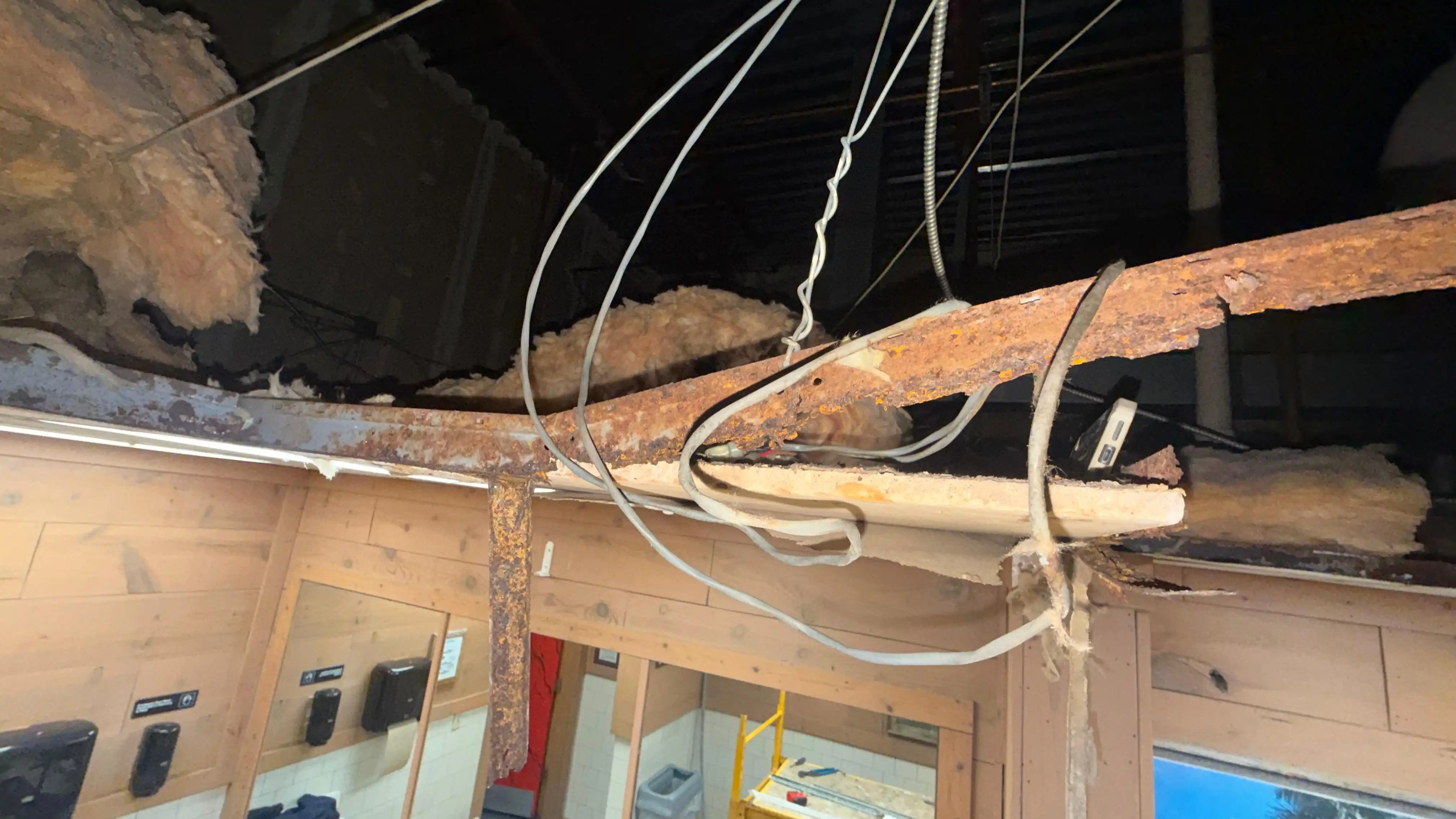
When Small Structural Issues Become Bigger Problems
Champz Services LLC — February 2025
Concrete buildings in Houston age in patterns that are predictable if you know what to look for. The combination of heat, humidity, coastal atmospheric exposure, and frequent rain creates conditions that accelerate concrete deterioration compared to drier climates. The visible symptoms — cracks, surface staining, spalling — appear gradually, and their significance is often underestimated until they reach a stage where repair costs have multiplied significantly.
Understanding how structural deterioration progresses, what the visible signs mean, and when to act is valuable knowledge for any commercial property owner or building manager in the Houston area. This article describes the progression of common structural issues in concrete buildings and explains why early evaluation and repair consistently produces better outcomes than deferred action.
How Concrete Deteriorates: The Corrosion Cycle
Most structural deterioration in reinforced concrete buildings follows a common sequence that begins with moisture.
Concrete is porous. Over time, moisture — from rain, from atmospheric humidity, and in coastal areas from airborne chlorides — penetrates the concrete cover layer that protects the embedded reinforcing steel. When moisture reaches the rebar, it initiates corrosion. Corroding steel undergoes a volume expansion of up to four times its original size. That expansion exerts enormous outward pressure on the surrounding concrete — pressure that the concrete is not designed to resist in this direction. The concrete cracks along the rebar line, then delaminate, and eventually sections of the surface break away entirely. This is concrete spalling.
The dangerous aspect of this cycle is its invisibility in the early stages. The corrosion of rebar begins inside the concrete, where it is not visible from the exterior. The concrete surface may appear intact and sound while significant corrosion is already underway within. By the time visible cracking, rust staining, or spalling appears, the internal corrosion has typically been progressing for years.
Reading the Early Warning Signs
Rust staining. Brown or orange streaks on a concrete surface — particularly appearing at column faces, beam soffits, balcony edges, and stair surfaces — are one of the earliest visible signs that embedded rebar has begun to corrode. The rust deposits are carried outward through the concrete cover as water moves through the pore structure. Rust staining at the surface indicates active corrosion within, even when the concrete surface itself appears intact.
Hairline cracking. Fine surface cracks in concrete or stucco are ubiquitous and not all of them indicate structural concern. However, cracks that follow straight lines parallel to embedded reinforcing elements, cracks at consistent horizontal or vertical spacing corresponding to construction joint intervals, or cracks accompanied by rust staining warrant closer evaluation. These patterns suggest that cracking is driven by rebar corrosion or by load-related stress rather than simple surface shrinkage.
Efflorescence. White mineral deposits appearing on concrete or masonry surfaces indicate that water is moving through the material and depositing dissolved calcium compounds on the surface as it evaporates. Efflorescence is not structurally significant on its own, but it confirms that water movement is occurring through the concrete — and where water moves, it will eventually reach embedded steel and initiate corrosion if it has not already.
Delamination. Before concrete spalls completely, it often passes through a delamination stage where the surface layer is cracked and loose but has not yet fallen away. A rubber mallet or even a knuckle tap on the concrete surface produces a hollow sound when the layer beneath is delaminated, versus a solid sound in intact areas. Delamination indicates that the expansion forces from underlying corrosion have already separated the surface layer from the substrate.
The Cost of Deferred Structural Repair
The economics of concrete repair are strongly time-dependent. The same structural issue costs progressively more to repair the longer it is deferred, because the underlying corrosion continues to progress while visible symptoms expand.
A small area of rust staining identified early can be addressed by opening the concrete, treating and coating the rebar, and applying a polymer-modified mortar patch. This is a targeted, relatively inexpensive intervention.
The same issue left for two or three years expands. The corrosion front advances along the rebar through the concrete. More surface area spalls. What began as a targeted repair becomes a systematic restoration of a much larger affected area. The difference in repair scope and cost can be significant — often an order of magnitude or more for conditions that started as minor and localized.
Beyond the direct repair cost, deferred structural maintenance creates liability exposure. Spalling concrete above pedestrian areas, parking decks, balconies, and building entries presents a falling hazard. In parking structures, deteriorated decks eventually require load restrictions or closure. These consequences compound the already-increased repair cost with business interruption and liability considerations.
What Structural Evaluation Looks Like
A professional evaluation of concrete condition involves more than a visual review of obvious damage. Experienced evaluators look at the pattern, extent, and nature of visible symptoms to diagnose underlying conditions that may not yet be visible.
Cover depth assessment — understanding how much concrete cover exists over the embedded steel in different locations — helps predict vulnerability. Delamination mapping using sounding methods defines the extent of subsurface separation before visible spalling appears. Crack width measurement and pattern analysis distinguishes structurally significant cracking from cosmetic surface cracking.
For parking structures and balconies, where the consequences of unaddressed deterioration are most serious, professional evaluation provides documentation that supports both repair planning and liability management. Many building codes and insurance policies require documented maintenance programs for elevated concrete structures.
Repair Approaches for Different Stages
The appropriate repair approach depends on the stage of deterioration and the extent of affected area.
Early-stage conditions — rust staining without spalling, hairline cracking without delamination — respond well to crack injection, surface sealing, and application of corrosion inhibitor penetrants that reach the rebar level and slow further corrosion. These approaches can significantly extend the time before more invasive repair is required.
Moderate conditions with active spalling, exposed rebar, and delaminated areas require concrete removal back to sound material, mechanical removal of corrosion products from exposed rebar, application of rebar corrosion inhibitors and coating, and installation of polymer-modified repair mortar in the removed area. This is the standard repair sequence for most concrete patch repair work on commercial buildings.
Advanced conditions — large areas of systematic deterioration, extensive rebar section loss, or structural member compromise — may require structural engineering assessment before repair design can proceed. In these cases, the goal is to restore structural capacity as well as surface integrity, which involves different materials and techniques than standard surface repair.
Structural Assessment is the Starting Point
Property owners who identify suspicious conditions on their buildings — rust staining, cracking at consistent locations, hollow-sounding concrete areas — should seek a professional evaluation rather than monitoring for continued progression. The evaluation defines what is actually happening, what the appropriate response is, and whether urgency is warranted. Without that assessment, there is no way to distinguish a condition that can wait from one that requires prompt action.
Champz Services LLC provides structural concrete assessments and repair services for commercial and residential properties throughout Houston. Contact us at 346-565-0518 or through our contact page to schedule a free assessment of your building's concrete condition.
Free Structural Assessment
We evaluate your concrete and recommend the most cost-effective repair approach.