
Why Regular Roof Inspections Matter
Champz Services LLC — November 2024
For most property owners in Houston, the roof is out of sight and out of mind — until water starts coming in. By the time a leak becomes visible inside a building, the damage has typically been developing for months or even years. A roof inspection changes that equation. It gives building owners an accurate picture of what is happening at the roof level before small issues turn into structural damage and expensive repairs.
At Champz Services LLC, we provide free roof inspections for commercial and residential properties throughout Houston. What follows is a straightforward explanation of why these evaluations matter, what inspectors look for, and how to think about inspection frequency for your specific property.
The Purpose of a Roof Inspection
A roof inspection is not about finding reasons to sell you a new roof. Its purpose is to give you an accurate, documented picture of the current condition of your roofing system. A good inspection identifies areas of active concern, areas that need monitoring, areas performing well, and an estimated remaining service life for the membrane or system.
For commercial properties especially, this information supports better capital planning. If an inspection reveals that a roof has three to five years of useful life remaining, a property manager can plan for restoration or replacement proactively rather than reactively. Planned work is almost always less expensive than emergency work, and it happens on your schedule rather than when a storm forces the issue.
What Inspectors Look for on Flat and Low-Slope Roofs
The majority of commercial buildings in Houston have flat or low-slope roofing systems. These systems — whether TPO, EPDM, modified bitumen, or built-up roofing — have specific failure points that an experienced inspector knows to check.
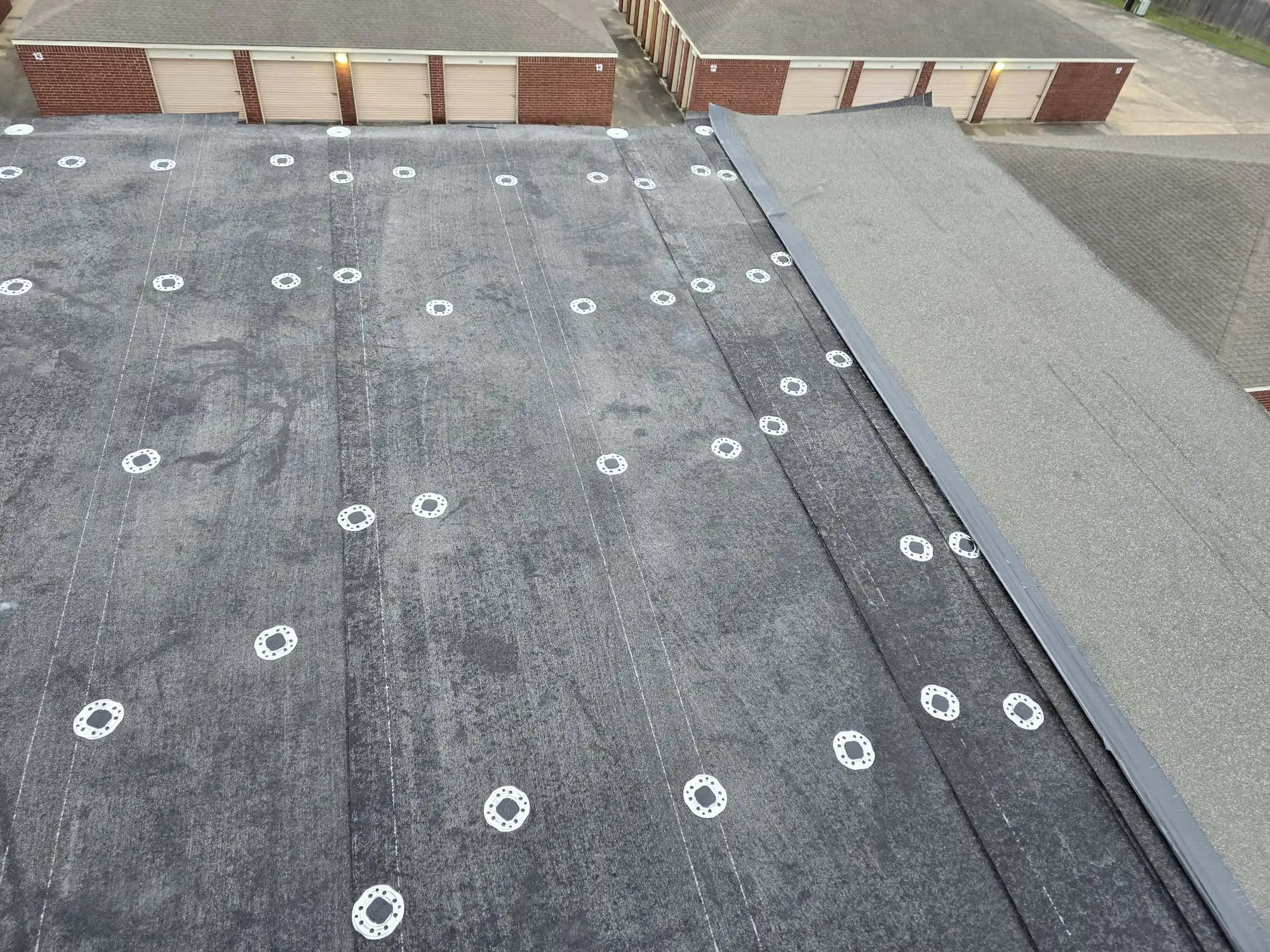
Membrane condition. The roof membrane is the primary water barrier. Inspectors look for blistering, bubbling, cracking, punctures, open seams, and areas where the membrane has pulled away from the substrate. A single open seam in a vulnerable location can allow water to infiltrate a large area of roof deck over time.
Flashing integrity. Flashings are the metal or membrane transitions at every roof penetration and edge — around HVAC equipment, pipes, drains, skylights, and along parapet walls. Flashing failures are the most common source of roof leaks. Water finds its way through the smallest gaps, and flashings move with the building while the membrane does not, making them the most likely failure point over time.
Drainage performance. Flat roofs require functional drainage systems to remove water after rain events. Standing water accelerates membrane deterioration and adds significant weight to the structure. Inspectors check that drains and scuppers are clear and that the roof slopes correctly toward drainage points.
Parapet walls and coping. The perimeter walls and their capping materials are exposed to direct weather and expand and contract independently from the roof membrane. Cracked coping joints and failed sealant at parapet walls are common entry points for water that then travels down into the building envelope.
Evidence of prior repairs. The number and quality of past repairs tells an experienced inspector a great deal about the overall condition and maintenance history of a roof. Multiple patches in concentrated areas often indicate a system that is approaching the end of its useful life.
What Inspectors Look for on Pitched Roofs
Residential and some commercial properties have pitched roofs using shingle or tile systems. Inspection priorities differ somewhat from flat roof systems.
Inspectors assess shingle condition for granule loss, cracking, curling, and missing units. They check ridge caps, valley metal, and all penetration flashings. Soffit and fascia condition is evaluated for signs of moisture that may indicate inadequate ventilation or leak pathways. Gutters are inspected for secure attachment and proper drainage.
How Houston's Climate Affects Roof Performance
Houston creates demanding conditions for roofing systems. The combination of intense UV exposure, high heat, heavy seasonal rainfall, and occasional tropical storm activity stresses roofing materials faster than many other regions of the country.
Thermal cycling — the expansion and contraction that comes from extreme daily temperature swings — works on seams and adhesive bonds over time. Houston's frequent heavy rain events put drainage systems under regular stress. Humidity keeps roofing materials in a consistently wet environment that can accelerate biological growth on some surfaces.
These conditions mean that inspection intervals appropriate for other climates may not be sufficient here. A roof that would be inspected every three to five years in a dry climate should typically be inspected every one to two years in Houston.
When to Schedule an Inspection Outside of a Regular Cycle
Certain events should trigger an unscheduled roof inspection regardless of when the last evaluation occurred:
After any named storm or hurricane that passes within range of your property. After any visible impact event — tree limb, hail, or debris. When any interior water staining appears on ceilings or walls. Before purchasing a commercial property. Before or after major HVAC or mechanical work is performed on the roof. When a roof approaches the ten-year mark on its service life, even if it shows no visible symptoms.
The Difference Between Repair and Restoration
One of the most valuable outcomes of a professional inspection is a clear recommendation about whether your roof needs targeted repairs or a full restoration system.
Targeted repairs address specific failure points — a leaking drain, a separated seam, a failed flashing. They are appropriate when the overall membrane is in good condition and only isolated areas are problematic.
Restoration involves cleaning the entire roof surface, completing all necessary repairs, and applying a new protective coating system over the existing membrane. Restoration extends roof service life by ten to fifteen years at a fraction of the cost of full replacement, and it is appropriate when the membrane is in generally degraded condition across a larger area.
A property owner who skips inspections often faces a decision between costly spot repairs that buy only a few additional years and a full replacement when they have missed the window for cost-effective restoration. Inspections keep you informed and preserve your options.
What to Expect from a Champz Roof Inspection
Our roof inspections are free, with no obligation to hire us for any repair work. We walk the entire accessible roof surface, document what we find with photographs, and provide a clear verbal and written summary of conditions.
We do not use inspections as a sales tactic. If your roof is in good condition, we will tell you that. If it needs attention, we will show you exactly what we found and explain what we recommend and why. We operate on the belief that informed property owners make better decisions, and better decisions lead to better outcomes for everyone.
To schedule a free roof inspection for your Houston property, contact us at 346-565-0518 or through our contact page.
Free Roof Inspection — No Obligation
We walk the roof, document what we find, and give you a straight assessment.